School holidays are a great time to get curious, get creative and explore big ideas together. And few topics spark the imagination quite like space.
These five hands-on activities turn everyday materials into opportunities to experiment, build and ask questions. They’re designed for families to try at home, with grown-up help where needed. No specialist equipment required—just a little curiosity.
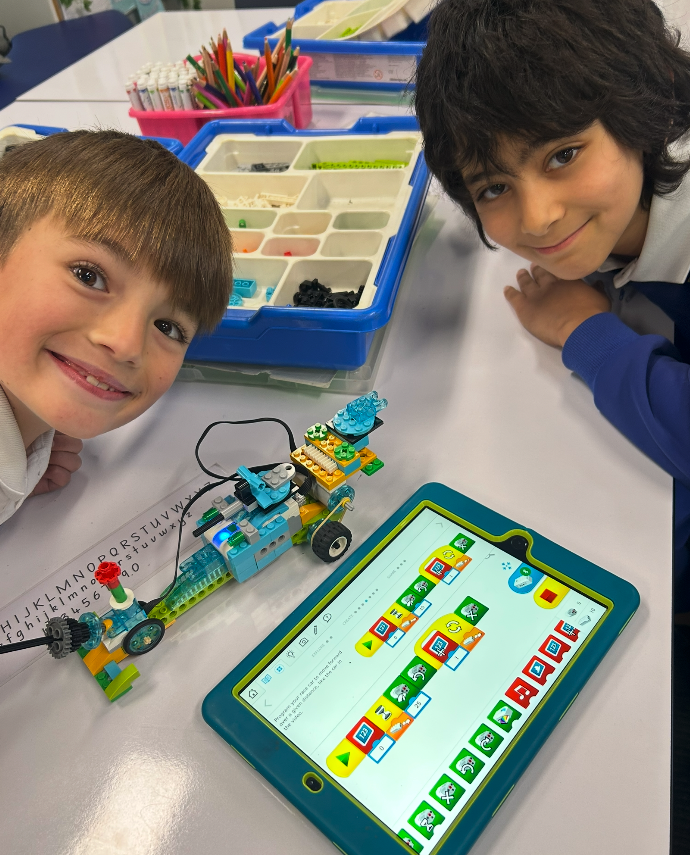
1. Build a Mars rover
How do rovers explore a rocky planet without a driver on board? Make a model rover and think like an engineer.
Use a small box, bottle caps, cardboard or other reusable materials to build a rover that can roll. Add a “camera” from a cardboard tube and make a simple grabber arm from folded card or craft sticks.
Then set up a Mars-like course using cushions, books or scrunched-up paper as obstacles. Can your rover cross the terrain without tipping over? What could you change to help it travel more smoothly?
The STEM idea: Engineering is a process of testing and improving. Try changing the wheel size, body shape or weight, then see what happens.
2. Design a parachute for a space capsule
A spacecraft needs a safe way to return to Earth. Make a parachute for a small “capsule” and see how its design affects the landing.
Cut a square or circle from a plastic bag, tissue paper or light fabric. Tie four equal-length strings to the edges and attach them to a small toy or scrunched-paper capsule. Drop it from a safe height and watch how it falls.
Try a larger canopy, shorter strings or a different material. Which version takes the longest to land?
The STEM idea: A parachute catches air and creates drag, which slows an object down. Changing its size or shape can change how it falls.
3. Make a moon crater
The Moon’s surface is covered in craters made by impacts. You can model how they form with a tray of flour and a few small objects.
Fill a shallow tray with flour, then sprinkle a thin layer of cocoa on top to make the surface easier to see. Drop small, round objects—such as marbles or balls of foil—from different heights. Compare the craters they leave behind.
What changes when you drop an object from higher up? What if you use a larger or heavier object?
The STEM idea: This is a model of impact. It helps explore how an object’s size and speed can affect the mark it makes. Keep the tray low and drop objects gently to avoid flour clouds.
4. Send a message with a paper rocket
Can you make a paper rocket fly across the room using only air power?
Roll a piece of paper around a pencil to make a tube, then tape the seam and add a folded paper point. Slide the rocket off the pencil. Place it over a straw and blow to launch it toward a target.
Try different nose shapes or fin sizes. Can you make the rocket fly straighter or travel farther? Mark a launch line and measure each attempt.
The STEM idea: Air pushed through the straw gives the rocket a force that sends it forward. Changing the rocket’s shape can affect its flight.
5. Build a constellation projector
Make a little star show at home with a torch and a paper cup.
Ask an adult to help make small holes in the bottom of a paper cup in a pattern inspired by a constellation. Shine a torch through the holes in a dim room and point the light at a wall or ceiling. Try moving the cup closer to or farther from the wall.
You could make several patterns and invent a story to go with each one.
The STEM idea: Light travels through the holes and projects a pattern. This is a simple way to explore light, shadows and how we connect stars into shapes.
Keep the curiosity going
After each activity, ask: What did you notice? What would you change? What do you want to find out next?
Space science is full of questions, and you don’t need a telescope or a laboratory to start exploring. A few household materials—and the freedom to test an idea more than once—can take you a long way.
A note for families: Adapt each activity to suit your child’s age and abilities. Have an adult help with scissors, small objects and any holes made in materials.
Contact us today to learn more about our workshops in schools and afterschool programs.